

Research Rewind
Our monthly compendium of the latest studies on gun violence

A prime directive of GVPedia is to continually search for and compile the latest peer-reviewed academic and scientific studies and reports related to gun violence. With this monthly feature, we list the most up-to-date information as an easy go-to to help fight the disinformation that floods our digital age.
Accessibility and Use of Violence Intervention Programs: A Retrospective Analysis of the National American College of Surgeons Committee on Trauma Firearm Study Research Dataset
“At hospitals that offer VIP services, patients with assault-related injury, Black patients, those with Medicaid, and individuals with a history of mental illness are more likely to receive VIP services.”
Beyond Comprehensive Background Checks—The Potential Role of Firearm Purchaser Licensing
“…their null findings invite consideration of whether more robust screening processes, such as firearm purchaser licensing, may be needed to reduce firearm homicide.”
Bivalent impact of social networks on overarming: Insights on the alignment between social and individual interests
“A world in which high levels of gun ownership are associated with high levels of gun violence suggests that regardless of one’s personal feelings about the value of gun ownership, people considering gun ownership may be making decisions that while individually rational may be collectively suboptimal… leading to what we describe as an ‘overarmed’ society.”
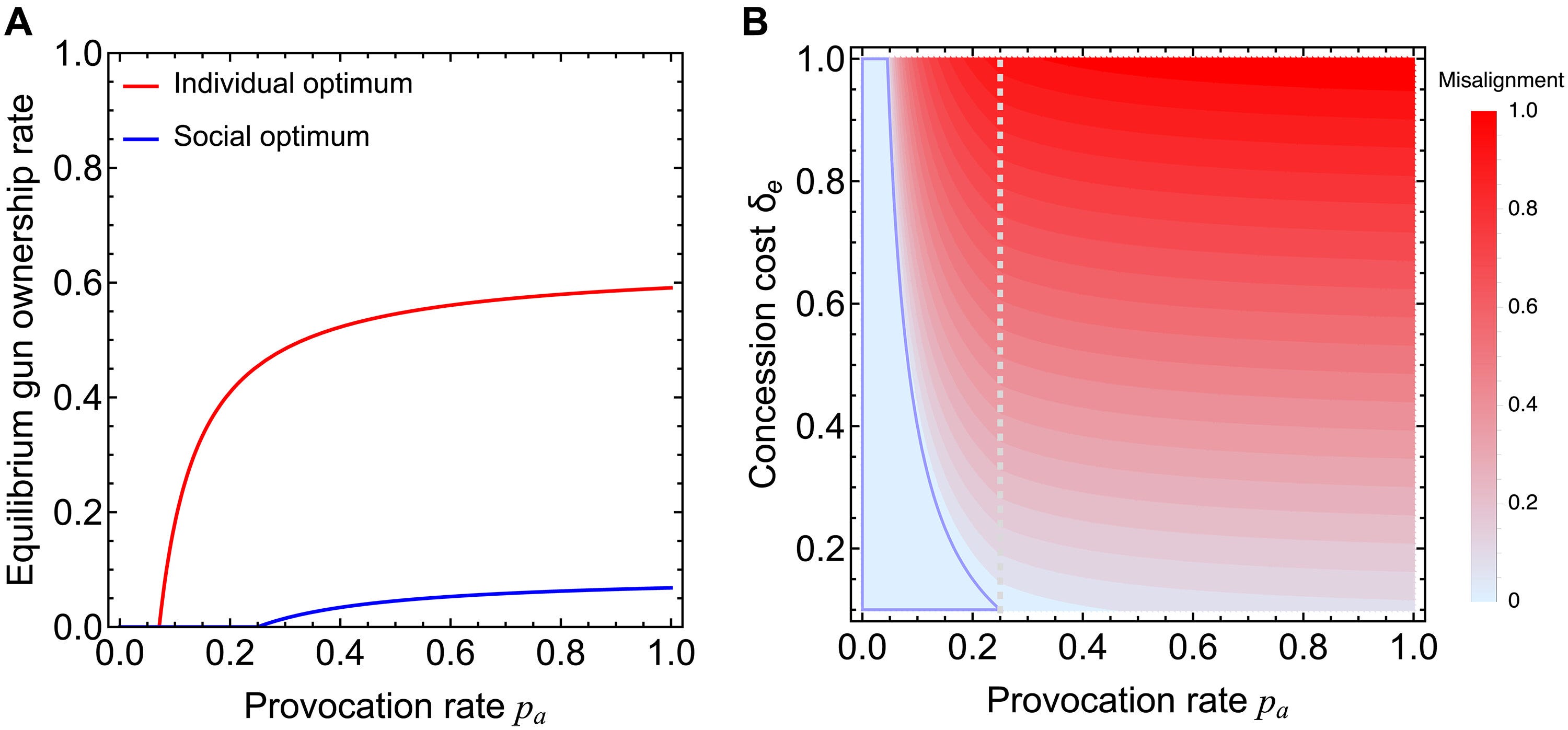
Via Science Advances
Feasibility study exploring sleep impacts among families in the aftermath of firearm-related trauma
“Focus groups revealed sleep difficulties among families impacted by loss due to gun violence.”
Firearms as a Market-Driven Epidemic: Potential Pathways to Reduce Preventable Firearm-Related Harm in the United States
“The epidemic of firearm harm fits the [market-driven epidemic] definition and is progressing through the five stages of an MDE.”
Firearms, storage practices, and child blood lead levels andhousehold dust lead loadings: findings from the HOME study
“Safe firearm and ammunition storage may reduce pediatric lead exposure in gun-owning households.”
Interpreting Firearm Mortality and Trauma Care Access in Chicago
“While we agree that unequal access to care is a key source of outcome disparities, several methodological issues substantially weaken causal inference for this premise.”
Invited Commentary: Violence Intervention Programs: Dramatically Underused?
“The ramifications of gun violence extend beyond the acute injury. Survivors of firearm injury face high rates of post-traumatic stress disorder, chronic pain, and impaired quality of life that persist for at least one year post-injury.”
Mental Health Outcomes in Children after Parental Firearm Injury
“Parents’ firearm injuries were associated with increases in rates of psychiatric disorders and mental health visits among their children.”
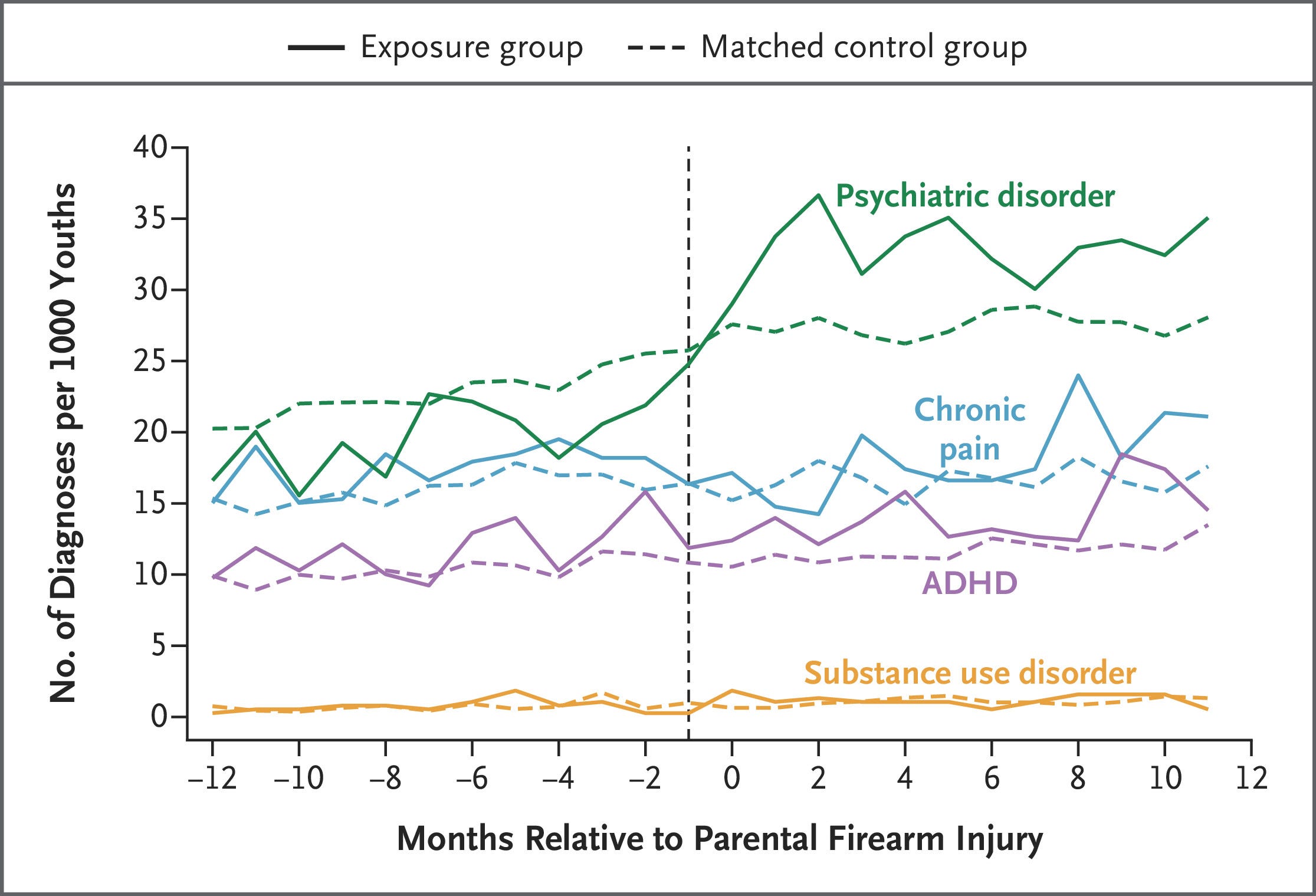
Via The New England Journal of Medicine
Poverty, Firearm Deaths, and Racial Disparities: Repercussions of the First Year of the COVID-19 Pandemic Across the United States
“This ecological study analyzed US state-level data on poverty rates and firearm death rates for the years 2019 and 2020 to assess changes in firearm deaths and poverty rates during the first year of the COVID-19 pandemic.”
Reducing Gun Violence at Scale: Baltimore GVRS
“The approach — ‘focused deterrence’ — has been implemented in some form by cities across the U.S. The strategy was introduced first in the Western police district, one of the highest-violence communities in the U.S.”
Sharing Information to Stop Mass Shootings—Final Report
“Across these findings, a consistent pattern emerges: warning signs often are present, observable, and distributed across multiple individuals and systems prior to an attack.”
Tackling online and influencer glamourisation of gun violence: a UK and European perspective
“This report finds that while current legislation provides significant oversight on formal advertising and illegal content, regulatory gaps remain where influencers promote harmful narratives through seemingly non-commercial content that falls outside traditional marketing definitions.”